
StarMet
New Joy Times LimitedLifestyle
4.4114.00 Reviews
- Version
- 1.1.20260603
- Installs
- 100.00K
- Age Rating
- Teen
Screenshots

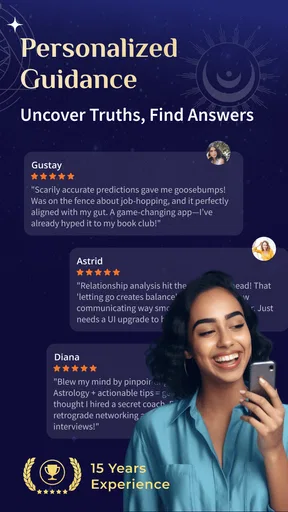
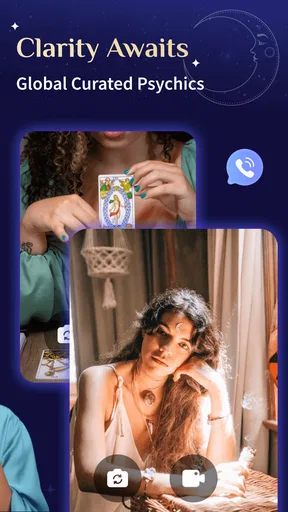
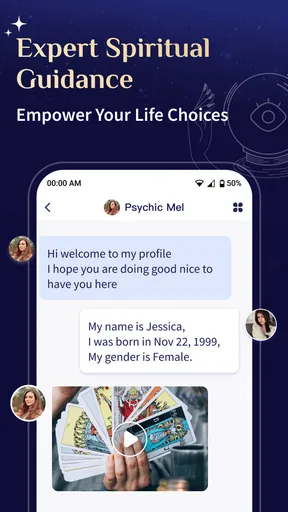
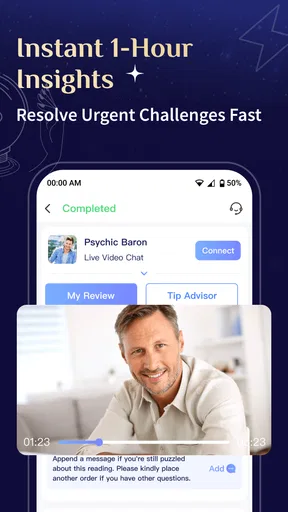
Our Review of StarMet
 Analysis by Appyee
I approached StarMet as a lifestyle app for people who enjoy psychic readings and want a more personal way to reflect on questions about relationships, choices, or everyday uncertainty. Its central promise is simple: connecting users with real psychics for insight. After spending time considering how that experience fits into normal routines, I think its appeal depends less on treating predictions as facts and more on using a reading as a guided conversation.
That distinction matters. An app in this space can feel comforting when you want another perspective, but it can also encourage impulsive decisions if you hand over too much authority to a reading. My overall impression is therefore mixed in a useful way: StarMet is worth exploring for curious adults who can keep healthy boundaries around spiritual advice, while it is a poor match for anyone looking for evidence-based counselling, emergency support, or guaranteed answers.
What using StarMet feels like in everyday life
StarMet sits in the lifestyle category rather than presenting itself as a medical, financial, or professional decision-making tool. It is free to install, which makes trying the basic experience less intimidating, although the app includes in-app purchases ranging from $1.99 to $199.99 per item. That wide range is the first practical detail I would want a new user to notice before starting a conversation.
The developer behind it is New Joy Times Limited, and the app has reached over 100 thousand installs. Its average rating is 4.4 from around 721 ratings, with roughly 114 written reviews. Those figures suggest that many people have found something worthwhile in the experience, but they do not tell me whether a particular psychic will suit my expectations. Ratings are useful as a broad signal; they are not a substitute for checking what I am being asked to pay for or how I personally respond to the service.
A realistic use case would be opening StarMet after a difficult day, when I am stuck replaying a conversation and want to organise my thoughts. I might ask about the emotional pattern behind the situation, read the response, and use it as a prompt to consider what I actually want to do next. That is a healthier role for the app than asking whether I should end a relationship, sign a contract, or ignore professional advice.
The experience is most useful when the question is open enough to invite reflection but specific enough to produce a meaningful response. “What should I do with my life?” is too broad to guide a useful exchange. A question such as “Why am I avoiding this conversation, and what would help me approach it calmly?” gives me something practical to think about, even if I do not accept the psychic interpretation literally.
Trust begins with knowing what kind of help this is
The phrase “real psychics” sets an expectation of human insight rather than a purely automated horoscope. I would still treat every reading as interpretive guidance, not verified knowledge. A confident tone can make a statement feel more certain than it really is, especially when the subject is emotionally important. StarMet works best when I remain an active participant instead of waiting for the app or a reader to make choices on my behalf.
This is also where it differs from common alternatives. A horoscope app usually gives a broader, more general reading based on a sign or birth information. A meditation app focuses on breathing, relaxation, or structured mental exercises. A journaling app leaves the interpretation entirely to me. StarMet occupies a more conversational middle ground: it offers an outside perspective, but the value depends heavily on the quality and relevance of the exchange.
That personal element can make a reading feel more engaging than a daily horoscope. It can also create more emotional investment. I may remember a direct statement from a psychic long after I would have forgotten a generic horoscope paragraph. For that reason, I would avoid using the service while distressed, tired, or under pressure to spend money. A short pause before replying or purchasing can protect the quality of the decision.
Account and payment choices deserve attention
Because StarMet offers paid items, I would approach the first session with a clear limit. Before beginning, I would decide how much time and money I am comfortable giving the experience, then stop when I reach that boundary. This is especially important when a conversation feels emotionally accurate. Feeling understood can make an additional purchase seem urgent even when it is not necessary.
A useful personal rule is to separate the reading from the action. I would finish the session, write down the main points in my own words, and wait before making a major decision. If the advice still seems sensible after the emotional intensity has faded, I can consider it alongside ordinary evidence and conversations with people I trust. If it only feels convincing in the moment, that is valuable information too.
I would also review the purchase screen carefully each time rather than assuming that every interaction follows the same cost. The listed range is broad enough that “free to install” should not be confused with “free to use without limits.” This is not a criticism of charging for a service; it is a reminder that the user should understand the financial step before confirming it.
For families, the Teen content rating is relevant. I would not treat that label as a replacement for parental judgement, particularly where readings concern romance, grief, fear, or other sensitive subjects. A teenager may interpret a psychic’s words more literally than an adult expects, so a parent or guardian should decide whether this type of app fits the young person’s maturity and circumstances.
Privacy-sensitive moments in a psychic reading
The most sensitive part of using an app like StarMet is not necessarily the reading itself; it is what I might choose to reveal while asking for one. Relationship problems, family conflict, health worries, workplace stress, and financial concerns can all appear in a single message. I would avoid entering names, addresses, passwords, account details, identifying photographs, or information about another person that I would not want shared beyond the conversation.
I would keep questions focused on my own feelings and choices. Instead of describing a partner with a full name, employer, and personal history, I could say that I am uncertain about communication in a relationship. That still gives a reader context without turning the session into a detailed personal dossier. The same principle applies to friends, colleagues, and relatives who have not agreed to have their private lives discussed.
Another practical habit is to avoid using the service as a place to record sensitive facts that I may later need to find or delete. If I want a lasting record of my thoughts, I would keep a separate private journal under my own control and use the reading only as a temporary prompt. This creates a useful boundary between reflection and personal data collection.
I would also be careful with screenshots and copied readings. A message that feels private can become public very quickly when it is forwarded to friends or stored in a shared photo library. Before saving anything, I would ask whether the text includes information about me or someone else that could cause embarrassment or harm if seen out of context.
What I can control, and what I should not outsource
User agency is the deciding factor in whether StarMet feels helpful. I can choose the question, decide how much context to provide, determine whether a response resonates, and set a stopping point. Those choices keep the experience grounded. The app should be a tool for reflection, not an authority that overrides my judgement.
One workflow I found sensible is to prepare three short notes before a reading: what I know, what I fear, and what I want to understand. This prevents me from asking increasingly dramatic questions simply because the first answer was vague. Afterward, I would write one action that is entirely within my control, such as having a calm conversation, checking a document, or taking a day to think. That turns an abstract reading into a practical next step without treating the prediction as a command.
I would not use a psychic reading to diagnose a mental or physical condition, decide whether to take medication, or respond to an immediate safety concern. In those situations, a qualified professional or emergency service is the appropriate alternative. Similarly, financial decisions deserve evidence, independent advice, and time to review the facts. StarMet may help me explore how anxious I feel about a decision, but it cannot replace the information needed to make that decision responsibly.
The app is also not the right choice for someone who wants a completely private, offline journal or a predictable self-care routine. A journaling app provides more control over the wording and purpose of each entry. A meditation app may be better when the real need is calming the body rather than interpreting a situation. StarMet is more suitable when I genuinely want an interactive spiritual perspective and understand its limits.
Compatibility and the practical first step
StarMet was released on February 17, 2023, and the current version is 1.1.20260603. It requires Android 6.0 or later, so most users with a reasonably modern Android device should be able to consider it. I would still check the app page on my own phone before planning a paid session, because compatibility is only one part of a smooth experience; account access, payment settings, and comfort with the available choices matter just as much.
My first session would be deliberately small. I would install the free app, read the opening screens instead of tapping through them automatically, and note any request for information before continuing. I would then choose a low-stakes question, avoid sharing identifying details, and pay attention to whether the interaction feels respectful rather than pressuring me toward another purchase.
If the first exchange leaves me calmer and more organised, I might return occasionally. If it makes me more anxious, dependent, or eager to spend until I receive a reassuring answer, I would stop using it. That reaction is more important than the overall rating because the same format can be relaxing for one person and unsettling for another.
There is also a difference between enjoying a symbolic reading and expecting certainty. I can appreciate the language, themes, and questions raised by a psychic without believing that every prediction will happen. Keeping that distinction clear makes it easier to leave a reading behind when it is no longer useful.
My cautious verdict on StarMet
StarMet has a clear place among lifestyle apps: it offers a direct route to psychic insight for people who enjoy spiritual guidance and want something more personal than a generic horoscope. I like the possibility of using a session to uncover feelings I have been avoiding, especially when I treat the response as a starting point for honest self-reflection.
Its limitations are equally important. Paid items can turn a casual experiment into an ongoing expense, and emotionally persuasive advice can influence decisions more strongly than it deserves. The app also requires careful handling of personal information because users may be tempted to explain intimate situations in detail. I would therefore keep questions general, set a budget in advance, and avoid treating any reading as professional or factual authority.
For a curious adult who wants a conversational spiritual experience, the free entry point makes StarMet reasonable to try. For someone seeking therapy, crisis help, medical guidance, financial planning, or a fully private writing space, another kind of app is the better choice. My recommendation is cautious but positive: use it with boundaries, protect other people’s privacy, and keep the final decision in your own hands.
The best way to approach StarMet is as a reflection tool, not a decision-maker. With that mindset, it can add an interesting perspective to an ordinary evening or a moment of uncertainty without taking control of the parts of life that require evidence, professional support, and personal responsibility.
Verdict
Strengths of StarMet
- Simple interface makes core features easy to find.
- Useful for discovering and connecting with other users.
- Runs smoothly on most modern Android and iOS devices.
- Notifications help you stay updated on new activity.
- Suitable for casual use without a steep learning curve.
Limitations of StarMet
- Some features may require an account or personal information.
- The user community may vary by region and time of day.
- Limited customization can make the experience feel basic.
- Frequent notifications may become distracting for some users.
- Performance may depend on your internet connection.
Similar Picks in This Category
View All
SmartThings
Samsung Electronics Co., Ltd.4.6

Google Home
Google LLC4.0

Pinterest4.2

Astrotalk - Talk to Astrologer
Astrology & Horoscope4.7

My Verizon
Verizon Consumer Group4.5

Samsung Wallet (Samsung Pay)
Samsung Electronics Co., Ltd.4.1
Frequently Asked Questions
What is StarMet and what can I do with it?
StarMet is an entertainment and social application centered on meeting people, discovering profiles, and interacting through conversations and other in-app features. After creating an account, users can usually personalize a profile, browse available content or members, and decide whom they would like to contact. The exact experience may vary by location, age, account type, and the features enabled in the current version.
Is StarMet free to download and use?
StarMet can generally be downloaded without an upfront charge, but some features may require in-app purchases, a subscription, or virtual credits. Basic access may allow registration and limited interaction, while advanced communication tools, visibility options, or premium discovery features can be restricted. Before confirming a purchase, review the pricing, renewal terms, and cancellation options shown in the app store and inside the application.
Is StarMet safe for meeting and communicating with other users?
StarMet may include reporting, blocking, moderation, and privacy controls, but users should still take responsibility for their own safety. Avoid sharing passwords, financial information, private documents, or your exact address. Be cautious of profiles that request money, pressure you to move conversations elsewhere, or provide inconsistent information. If you decide to meet someone, choose a public place and tell a trusted person beforehand.
What information does StarMet require during registration?
The registration process may request information such as an email address or phone number, date of birth, profile details, photographs, and preferences. Some permissions, including notifications, camera, photos, or location, may be optional but can support specific features. It is worth checking the privacy policy and your device settings before granting access, especially if you prefer to limit location sharing or personalized recommendations.
Can I delete my StarMet account and cancel payments?
You should be able to manage your profile and request account deletion through the app or its support channels, although the exact steps can depend on the platform and current version. Deleting the app does not automatically cancel an active subscription. If you have paid through Google Play or the App Store, cancel recurring billing in the relevant store settings and verify the cancellation before removing your account.
